 |
10 June 2026
|
10 June 2026
Printed circuit boards (PCBs) are amazing devices that can be built to meet practically any specification or need. From powering small and simple electronics to multilayer arrays used in the most complex of machines, they are truly some of the most flexible items in manufacturing.
Hygiene is incredibly important in any aspect of production, but with something as small and precise as PCB manufacturing, it becomes even more crucial. Let's explore what PCB cleanliness is, why it is so important in manufacturing and assembly processes, and what we do here at J-TEQ to establish and promote hygiene standards.
Cleanliness can refer to many factors, such as the physical appearance of a printed circuit board assembly (PCBA), but it can also include the presence of contaminants that might be invisible to the naked eye. High contamination levels can cause wider issues in the operation of the PCB, potentially even leading to the full failure of the board. Even a clean human hand could still leave behind trace organic contaminants or moisture, leading to issues further on in the board's life.
Cleanliness and hygiene in PCBAs can also be linked to the actual
In industries such as medical, aerospace, or defence, PCB failure can lead to catastrophe. ISO standards and mandates from regulatory bodies ensure that electronics manufacturers like J-TEQ have a concrete set of standards to adhere to.
We don't clean PCBAs in quite the same way that we sweep our manufacturing facility's floors. Running a duster over each board before it heads off to our clients would probably create even more problems for everyone. PCB cleaning methods are careful processes used as part of the wider manufacturing workflow, using specialised cleaning materials and practices to remove contaminants without compromising or damaging the board's surface or components.
One of the most common cleaning methods involves a bath and rinse cycle. This aqueous cleaning process removes soluble contamination such as flux residue (a material used in the preparation of the board's surface), ionic contamination from hands and other sources, or any other debris that may have ended up on the board during assembly.
Some solutions have involved changing how we handle things earlier in the process, such as the development of no-clean flux. Together with the development of materials fundamentally designed to be cleaned more easily, even in places that may be difficult to clean with more traditional methods, we can create conditions that make it easier to clean PCBs and send them forward into functional testing with minimal disruption.
The vast majority of good PCB hygiene lies in proactive, preventative measures. Simple measures such as wearing gloves and other appropriate personal protective equipment where needed provide a great starting environment for limiting human contaminants. All materials also need to be stored correctly, whether this is the PCBs themselves or other materials used in the manufacturing process such as solder paste.
Limiting environmental factors and ensuring sensitive components are not exposed to harsh conditions are important practices used by trusted electronic manufacturing providers such as J-TEQ. Aligning with standards ISO 9001 and ISO 13485 shows our commitment to delivering products that meet the needs and expectations of our customers. It is not just about choosing a manufacturing partner who understands the need for hygiene in their processes, but also actively demonstrates it through their practices.
Testing methods can only reveal so much, and even modern processes like ultrasonic cleaning are not complete guarantees that every PCB is viable. This is why it is so crucial that you work with partners who understand why hygiene and manufacturing standards must be maintained and met with every project.
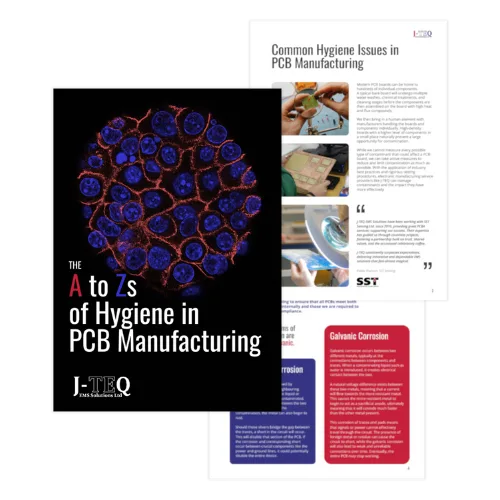
All the staff at J-TEQ take our hygiene obligations incredibly seriously to ensure we can maintain the high standards expected by our customers. Explore how we mitigate some of the most common hygiene issues in PCB manufacturing in our white paper below.
"(Required)" indicates required fields